Care during pregnancy
During pregnancy, your body undergoes many changes to accommodate your growing baby. You may also feel overwhelmed by the responsibility that lies ahead. Learn the many ways in which you can care for yourself and your unborn baby below.
Tips for a balanced pregnancy
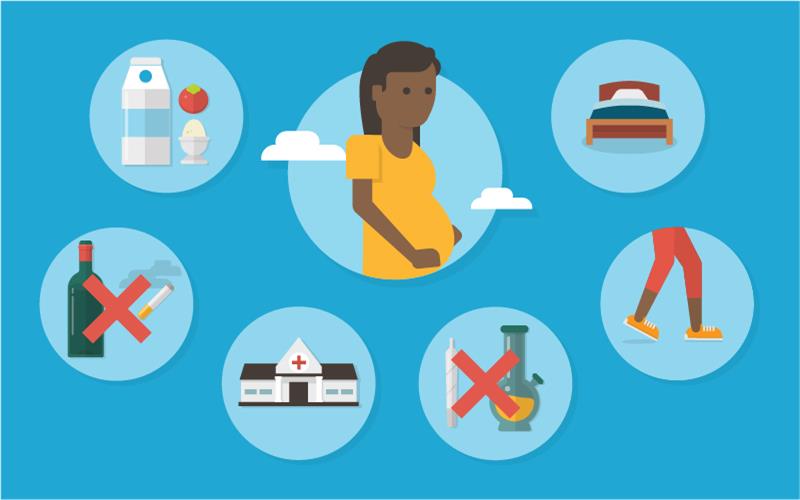
Our graphic and the information below it offer tips to keep your body and mind healthy throughout your pregnancy.
Have regular check-ups
Top tip
Basic antenatal care (care during pregnancy) is offered free of charge at all clinics. Pregnant women should attend at least 8 pregnancy check-ups.
- Go to one of
our clinics to book for your antenatal care as soon as you find out you are pregnant.
- You should attend at least eight check-up visits throughout your pregnancy.
- When you are 36 weeks pregnant, you will be transferred to your nearest Midwife Obstetric Unit (MOU) for further care and the birth of your baby.
- Make sure you make transport arrangements in preparation for the birth.
- You’ll have follow-up visits throughout your pregnancy at one of our Midwife Obstetric Units (MOUs). During these visits, we will monitor your baby’s growth and development as well as your own health.
- Register on MomConnect (dial
*134*550#) for health support via your cellphone. Once registered, you will receive health promotion messages to improve your health and the health of your baby.
At the checkups:
- any health problems you may have will be detected early and treated timeously;
- health professionals will be able to answer any questions you may have about the pregnancy;
- you will be tested for HIV for free;
- your baby’s movements and growth will be monitored and, depending on the stage of the pregnancy, an ultrasound will be done; and
- your blood pressure, weight and urine will be tested and a healthcare provider will do a blood test.
Top tip
Invite your partner, a close friend, or a family member to accompany you to your check-ups. Support throughout the pregnancy, during labour, and after the baby is born is important.
Nutrition:
- Eat a balanced diet (eat healthy, do not skip meals, do not overeat) throughout your pregnancy to get the right nutrients.
- Consider taking vitamin supplements – folic acid, calcium and iron are important for your developing baby during pregnancy till six months after all breastfeeding has stopped.
- Eat a healthy breakfast every morning.
- Include dairy, eggs, plenty of greens, and fish in your diet.
- Enjoy healthy snacks such as seeds, nuts and fruits.
- Stay away from refined, processed foods and fizzy drinks.
- Avoid stimulants such as caffeine.
- Avoid drinking alcohol, taking drugs, and smoking while pregnant and breastfeeding – it can have very harmful effects on your baby.
Exercise:
- Staying active during the pregnancy is healthy for both you and your baby.
- Opt for gentle, low-impact exercises such swimming or walking – which are also known to calm your mind and reduce stress.
The importance of rest:
- Getting plenty of rest will help you adapt to the many changes and demands of your body during pregnancy.
- You need rest for your baby to grow and develop, and you’ll be better prepared to look after the baby once it arrives.
Avoid these:
- Raw or uncooked meat, shellfish and eggs
- Soft cheese, blue cheese or any unpasteurised cheese
- Stress and social stressors
- Staying up too late
support for depression
If you or someone you know is suffering from postnatal depression, get help from Postnatal Depression Support SA. SMS “help” to
082 882 0072 and they will contact you.
Pregnancy danger signs
Return to your clinic immediately if you experience any of the following symptoms:
- abdominal pain (not discomfort)
- blurred vision
- liquid (amniotic fluid) leaking from the vagina
- persistent headache
- reduced fetal (baby) movements
- vaginal bleeding
Care for pregnant women
Pregnant women and new mothers need lots of help and support. Pregnancy is an exciting time, but it’s also a time of dramatic changes that can make expectant mothers feel overwhelmed. If you or someone you care about is pregnant, it’s important to be able to reach out both during their pregnancy and once the baby arrives.
Partners, friends and family can:
- accompany her to the clinic for her check-ups;
- assist with household tasks to allow her to have enough rest;
- check the well-being of the unborn baby by paying attention to movements and baby kicks;
- discourage the drinking of alcohol, smoking or taking illegal drugs, as this will cause abnormalities in the unborn baby;
- encourage healthy eating and safe physical activities; and
- help with childcare, as pregnant women who are working might need help taking care of older children while they’re at work, or help with the new born once it arrives.
Communities can:
- lighten the load by helping carry heavy shopping bags; and
- offer up a seat when travelling on public transport.
Substance abuse and pregnancy
Illegal drugs
Using illegal drugs during pregnancy increases the risk of pre-term labour, low birth weight, birth defects and developmental delays in your child.
help is available
Free drug and alcohol treatment is available at our Matrix clinics. If you are 18 years or older, you can go directly to a clinic offering matrix-certified drug and alcohol support programmes near you. Download the information pamphlet for more details.
Cigarettes
Cigarette smoking during pregnancy increases the risk of pre-term labour, low birth weight, and birth defects of the mouth and lip (cleft palate). Smoking during, and after pregnancy, also increases the risk of infant death syndrome (SIDS).
Alcohol
Drinking while pregnant can harm your baby, damaging their brain and organs. In extreme cases, a baby whose mother drank heavily during pregnancy can be physically and mentally impaired with Fetal Alcohol Syndrome (FAS). Find out more about
the dangers of alcohol.
Remember
FASD cannot be cured, but it is 100% preventable! The best solution: do not drink while you are pregnant or breastfeeding.
The City's runs a FASD Educational initiative which educates 12-18 year olds about the negative effects of drinking alcohol while pregnant, find out more by clicking on the City Connect link below.
Would you like to print this page?
print