
World Homelessness Day brings partners together to strengthen the response to rough sleeping in Cape Town
14 October 2026
To commemorate World Homelessness Day observed on 10 October, the City of Cape Town brought together government, civil society, service providers, people with lived experience and community stakeholders for its first official dialogue on homelessness, with a focus on strengthening collaboration, preventing rough sleeping and achieving lasting outcomes.
Held on 13 October under the theme “Beyond the Streets”, the dialogue marks the start of an annual gathering intended to bring the sector together to strengthen collaboration, share progress and identify solutions to reduce rough sleeping in Cape Town.
The dialogue focused on the progress made since the City’s Strategy to Reduce Rough Sleeping was approved by Council in 2024, and the work under way to strengthen prevention strategies, improve data and create sustainable pathways out of homelessness.
In the last financial year, the Street People Programme engaged with 10 127 people sleeping rough and conducted 22 843 follow-up engagements. Through these interventions, 2 115 people secured shelter placements or other forms of support, while 163 people were reunited with their families.
Between May and June this year alone, the programme completed more than 1 600 screenings, 4 500 follow-up engagements and 375 placements into shelters and Safe Spaces.
In the current financial year, the City has allocated nearly R100 million to its homelessness response, with R87 million supporting frontline interventions. This includes funding for the operation of the City’s four Safe Spaces, outreach and after-hours services, the annual Winter Readiness programme and short-term work opportunities through the Expanded Public Works Programme (EPWP).
A further R10,125 million is being invested in expanding shelter accommodation infrastructure across the City.
While accommodation is essential, the City’s Strategy recognises that a lasting response must extend beyond providing a place to sleep. Its approach focuses on building a network of care that connects people with social services, healthcare, mental-health and substance-use support, skills development, employment opportunities and, where appropriate, family reunification.
The dialogue also explored prevention-focused approaches and support for particularly vulnerable groups, including older persons and people experiencing mental health challenges while sleeping rough on the streets.
A highlight of the dialogue was the announcement of eight clients who will represent South Africa at the Homeless World Cup in Mexico, recognising the role of sport in creating opportunities, building confidence and promoting social inclusion for people who have experienced homelessness.
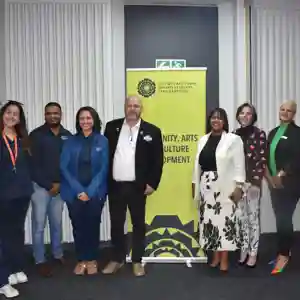
‘Homelessness is not hopelessness. Our job is not simply to count beds or outreach engagements, but to help people move from the street towards stability, recovery, reintegration and independence. That means investing in prevention, accommodation, better data and a stronger network of care, while working closely with the organisations and people who understand this challenge first-hand,’ said the City’s Mayoral Committee Member for Community Services and Health, Cllr Francine Higham.
Cape Town’s participation in the Institute of Global Homelessness’ Vanguard Cities network is helping strengthen this approach, with shared targets for 2030 agreed with partners.
These targets include reducing the number of people entering rough sleeping by 25% against the 2026 baseline, reducing the overall number of people sleeping rough by 25%, reducing the average length of time people spend sleeping rough by 20%, and ensuring that at least 30% of people assisted out of rough sleeping do not return within two years.
The City is also preparing for its first citywide Point-in-Time count, with a pilot planned for November ahead of a full citywide count in 2027. In addition, it is developing a citywide database accessible across trusted partners to improve understanding of individual needs, track progress through support services and identify gaps.
‘We must measure not only what we do, but what changes as a result. Success must be measured by whether fewer people enter rough sleeping, whether people spend less time on the streets and whether they are able to remain off them. No single organisation can solve homelessness. But every organisation can contribute to the solution. These are shared commitments that require coordinated action, shared information and resources, and a stronger network of care,’ add Councillor Higham.
For more information on the City’s response to rough sleeping, visit: https://www.capetown.gov.za/local-and-communities/community-health-and-safety/street-people/safe-spaces/
Published by:
City of Cape Town