
R16 million electrification project lights up RR Section in Khayelitsha
6 April 2019
In the next few days, residents living in RR Section informal settlement in Khayelitsha will all have access to electricity, if all goes as planned. The City is overjoyed at this milestone that has been reached.
Approximately R16 million has been invested into the electrification of RR Section informal settlement.
Eskom is currently in the process of switching on the remainder of the approximately 2 000 connections that were planned for RR Section informal settlement. To date, 1 801 households have already been connected over the first two phases of electrification.
There are areas in Cape Town which are supplied by the City and areas which are supplied by Eskom.
In City-supplied areas of Cape Town, close to 100% of residents in informal settlements have access to electricity where it is possible to do so. Areas without electricity include Eskom-supplied areas and areas where residents have settled on near-uninhabitable land, such as in wetlands and under power lines. RR section informal settlement in Khayelitsha is supplied by Eskom. Electrification in City-supply areas in general is above 97%.
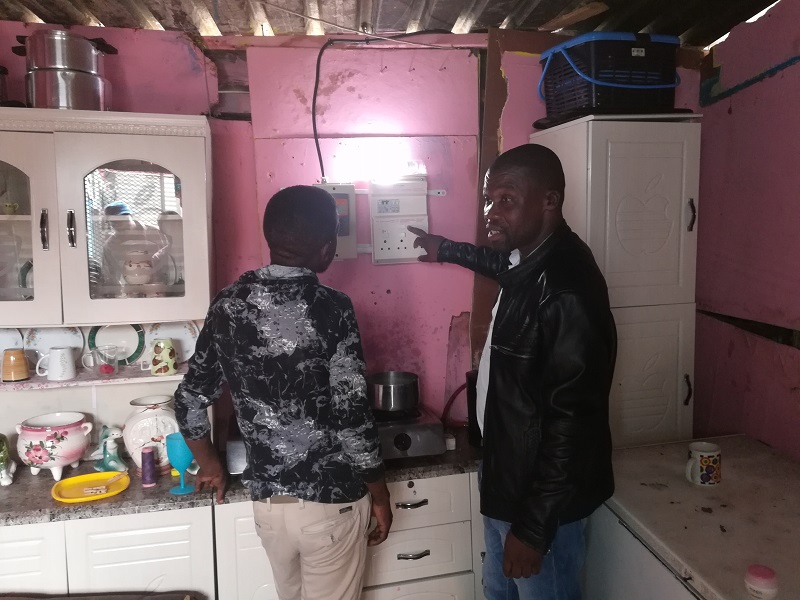
Another resident, Ms Eunice Peter, who was also a community liaison officer for the project was overjoyed.
‘After living in this settlement for many years, we are very happy to finally be provided with electricity by Eskom and the City. We will now live like other communities in a dignified manner. I would also like to thank Eskom and the contractor for the opportunity that I could be a community liaison officer in the project and for the experience that I have gained during this time,’ she said.
The electrification project comes after a number of years of planning, community engagement and hard graft.
Initially, the project required informal structures to be relocated to enable the electrification work to proceed. This was an immense task and was necessary to enable Eskom to get sufficient access to install the services. Part of the informal settlement is situated on Passenger Rail Agency of South Africa (PRASA) land, while the other part is situated on City-owned land. The City initially approached PRASA and Eskom to request the electrification of this area.
‘It was heart-warming to meet some of our residents who were very grateful for having access to electricity. This project has also created employment for the local community.
‘This project is more than just about having a lightbulb. Having electricity enables economic growth and allows small home-based businesses to operate more efficiently; it enhances safety; it reduces the risk of fires; it promotes better public health; and it also creates an improved environment for learners to achieve better academic results since they no longer have to use candle light to do their homework or to study for exams in the evenings.
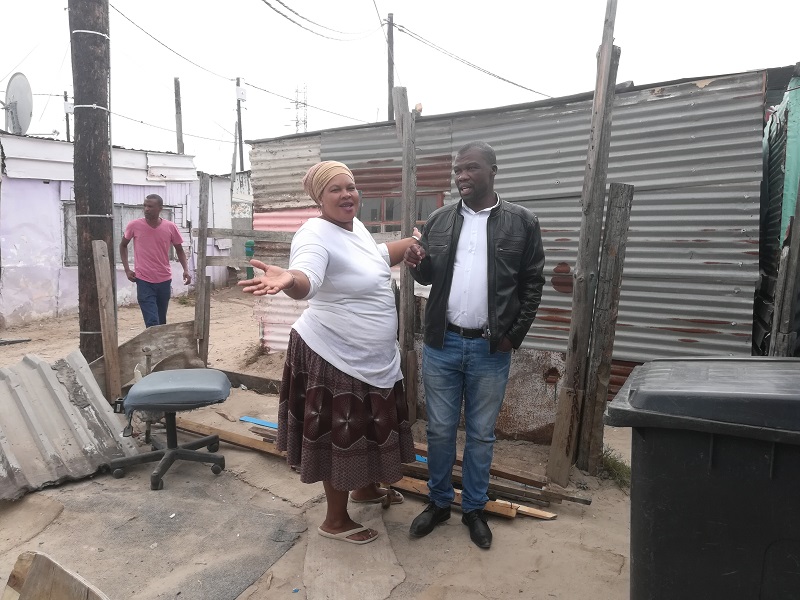
‘We therefore want to thank our residents for their patience over the years. Also, the partnership between the Passenger Rail Agency of South Africa, the City and Eskom is resulting in tangible positive change. We want to thank Eskom sincerely for all of the hard work and dedication that has gone into this electrification project,’ said Councillor Maxiti.
‘Going forward, in keeping with the City’s commitment to enhancing basic service delivery, the City’s Electricity Generation and Distribution Department as well as the Informal Settlements and Backyarder Department will continue to go above and beyond the call of duty to see that our planned projects in informal settlement areas and services to backyard dwellers on City-owned land come to fruition,’ said Councillor Maxiti.
Mr Kgopisho Mahunonyane, Eskom’s Western Cape Portfolio Manager, said: ‘There were quite a few challenges during this project, but we managed to stick to our deadlines. We made a commitment to the community and now we can finally see the positive impact.’
Permanent electricity services cannot be installed in cases where, for instance, residents live under power lines or on railway/road reserves, or where the land is uninhabitable such as settlements formed on wetlands, floodplains or other water bodies; where residents have settled on privately-owned land; or where no permission exists for the City to install such basic services, among others.
CAPTIONS:
Photograph 1 (left): Resident Samkelo Vimbi with Councillor Phindile Maxiti, the City of Cape Town’s Mayoral Committee Member for Energy and Climate Change.
Photograph 2 (right): Councillor Phindile Maxiti, the City of Cape Town’s Mayoral Committee Member for Energy and Climate Change, with a community leader.
End
Published by: