
Mobility Infrastructure Summit puts people at the centre of Cape Town’s transport planning
2 October 2026
Mobility Infrastructure Summit puts people first in mobility planning
The City of Cape Town’s annual Mobility Infrastructure Summit has placed people, rather than vehicles or technology, at the centre of conversations about how Cape Town moves into the future. Held at DHL Stadium on Thursday, 1 October, the first day of Transport Month, the summit brought together transport professionals, engineers, technology specialists and government stakeholders to consider how infrastructure, public transport, data and innovation can work together to create a safer, more connected and accessible city.
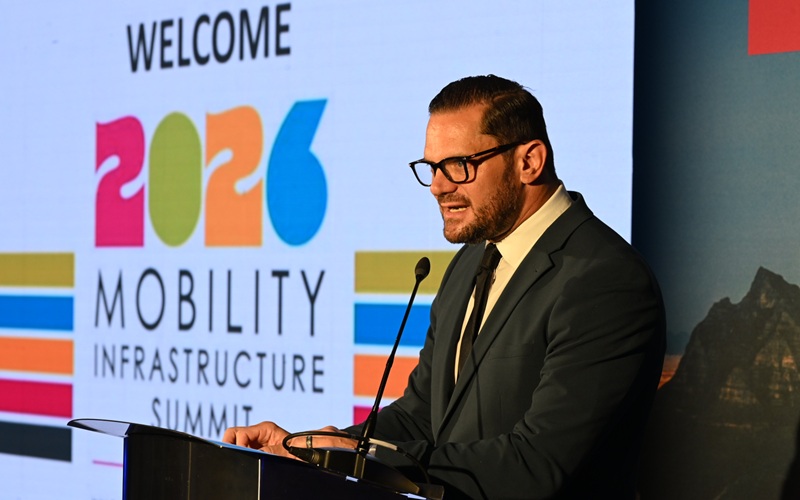
‘The future of mobility is not simply about building more roads or putting more technology into our networks. It is about designing a city around people, making every part of the journey safer and more connected, and giving Capetonians real choices in how they move around the city. The message from this summit was clear: better integration, smarter infrastructure and collaboration will be critical to keeping Cape Town moving forward,’ said the City’s Mayoral Committee Member for Urban Mobility, Councillor Quintas during their opening remarks.
Professor Megan Bruwer of Stellenbosch University, the second speaker for the day, highlighted the importance of putting pedestrians first when planning future infrastructure, noting that 68% of traffic crash fatalities in Cape Town in 2025 were pedestrians and pointing to international examples where significant investment in walking and cycling infrastructure has helped make these modes a natural part of everyday life.
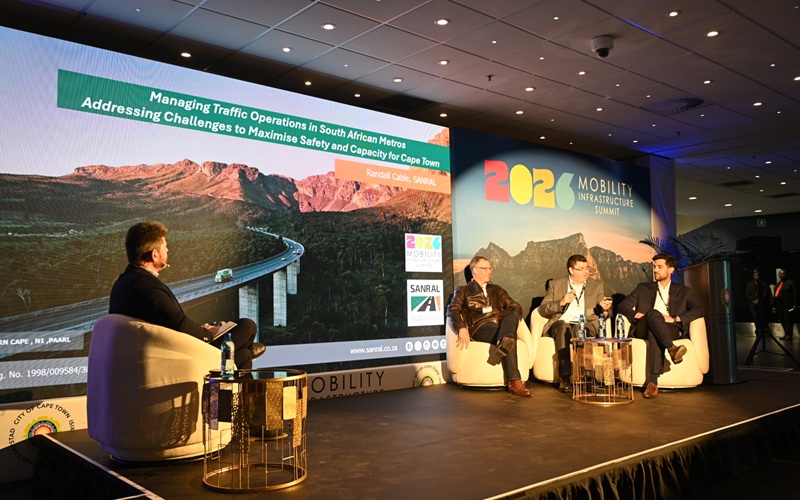
SANRAL’s Randall Cable, during a panel discussion led by the City’s Transport Planning and Network Management Manager, Sean Glass, highlighted the role of integrated traffic management in improving safety and capacity, including through Cape Town’s Transport Management Centre. Cable noted that authorities already have substantial data on where and when pedestrians move across freeway networks, which can help inform safer infrastructure and enforcement interventions.
The summit also looked at how innovation can improve the way infrastructure is maintained. Andrew Geel of BVi Consulting Engineers highlighted opportunities to reuse reclaimed asphalt, while research into roads affected by grey water in Khayelitsha and surrounds had also informed changes to the City’s engineering standards.
Marianne Vanderschuren, from the University of Cape Town’s Centre for Transport Studies, also emphasised that smart mobility is ultimately about people, not technology, with better-connected public transport, seamless transfers and safe first- and last-mile connections among the priorities.
Vanderschuren’s message was echoed by the summit’s broader focus on moving from reactive to predictive infrastructure management; using sensors, real-time data and digital tools to identify problems earlier, improve maintenance and protect the performance of critical infrastructure.
The summit also featured 12 exhibitors, set up around the seated delegates, showcasing technologies and infrastructure solutions, from road safety products, CCTV, thermal and network cameras to large-scale AI models and more. All exhibitors demonstrated how innovation can support safer durable roads, more responsive networks and better-informed decision-making.
‘Good infrastructure is the infrastructure nobody notices. People only notice it when something breaks, so our measure of success is how rarely residents have to think about us. That said, headlines about Cape Town’s congestion, while not always reflecting the full picture, are a reminder that we need to move with greater urgency on alternatives to the private car. There has never been a better time to accelerate the implementation of the City’s walking, cycling, public transport and travel demand management strategies as we embrace a future centred on people first. As one speaker put it at the summit: the future is here, what we do today, we do for our children and their children!’ concluded Councillor Rob Quintas.
Published by:
City of Cape Town, Media Office