
Construction ongoing at City’s R21 million Atlantis wastewater treatment works solar project
30 October 2026
City advances energy security with R21m solar plant
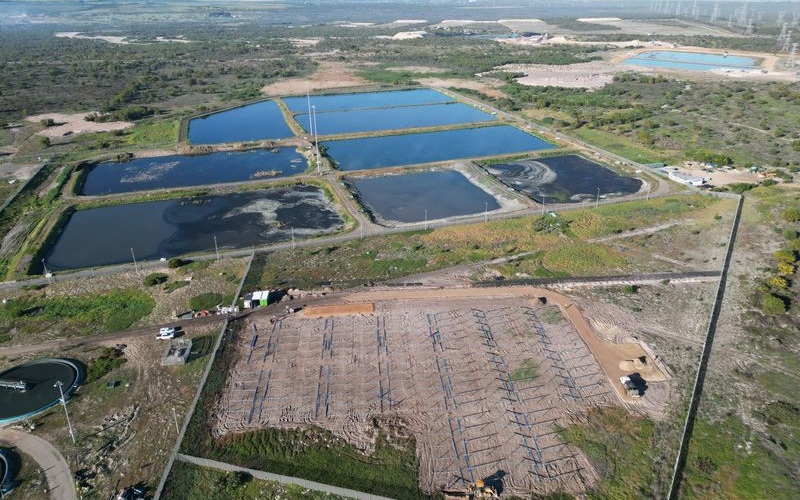
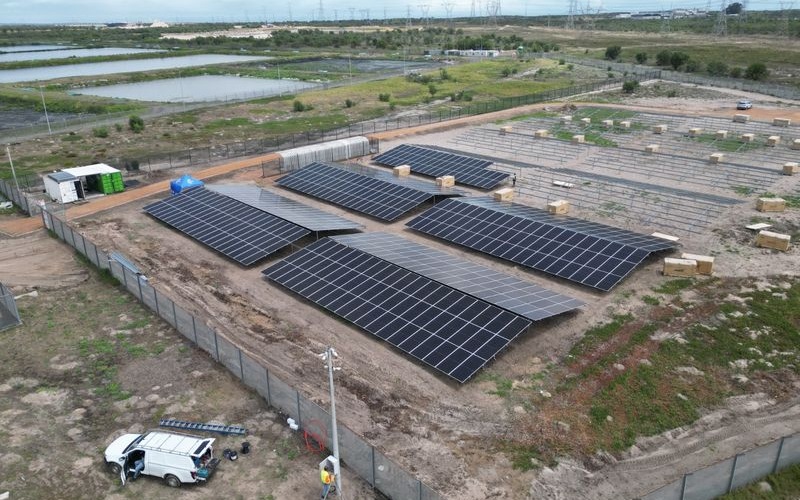
The City is investing R21 million in a solar photovoltaic (PV) installation at Wesfleur Wastewater Treatment Works (WWTW) in Atlantis aligned to its efforts to reduce electricity costs over time while supporting more sustainable wastewater treatment operations. This is just one of the City's recent pioneering energy security milestones.
The installation comprises 1 680 solar panels with a total capacity of 1,04 MW, expected to generate approximately 1,75 million units of electricity annually, equivalent to the electricity needs of around 365 households. The panels capture sunlight on both sides and face east and west, maximising electricity generation throughout the day. Six inverters convert the solar energy into electricity for use at the treatment works.
‘This investment follows a similar R14,6m project at the Kraaifontein WWTW which the City launched in August 2024. Investing in state of the art renewable energy infrastructure helps the City ease reliance on the electricity grid, lowers operating costs and contributes towards a reduced carbon footprint. Projects like this support our efforts to build a more resilient and sustainable metro,’ said Mayoral Committee Member for Energy, Alderman Xanthea Limberg.
Security measures include CCTV cameras and security lighting, with backup power providing up to 6,5 hours of lighting during an outage. Importantly, the project has also created employment opportunities for 11 local workers.
‘The City also recently launched South Africa’s first metro-built hybrid power station. This R220m hybrid power facility, also located in Atlantis, has 12 850 solar panels and two utility-scale batteries, covering 15 hectares or roughly the area of 21 rugby fields. These projects are examples of the City’s commitment to energy security,’ said Alderman Limberg.
Cape Town is South Africa’s first city to achieve various other pioneering energy security milestones over the current municipal term, including:
- Signing of two IPP Power Purchase Agreements – saving up to 21% below-Eskom rates - as part of an initial power procurement of up to 200MW to be bought on the open market. The City further plans to procure up to 500MW from energy traders and aggregators, as well as further power generation from waste-to-energy producers.
- The Municipal Energy Efficiency Programme across City operations - including streetlight and building retrofits, rooftop solar PV - has to date saved more than 427 GWh of electricity and generated savings of approximately R625 million.
- The municipal SSEG programme has seen 2,2 MW in solar generation so far installed across multiple municipal sites as part of a 25MW target within the next two years.
- Enabling Capetonians to earn cash for power, with residents and businesses earning R67 million from selling 150 gigawatt hours of their excess solar power back to the City in exchange for municipal bill credits and cash since June 2024. Over 250 MVA of rooftop PV has since been installed across the city, which effectively reduces pressure on the grid and improves energy resilience.
- Introducing energy trading that is ‘wheeled’ across the City’s grid, with over 1 700 megawatt hours of power traded between power producers and consumers since 2024.
- Completion of feasibility studies and readiness to engage the market for development of a City-owned 70MW hybrid solar PV and battery storage power plant in Paardevlei by 2029.
- Successfully mitigating 24% of load-shedding during the extended Eskom generation crisis period – the only city to do so.
Published by:
City of Cape Town, Media Office