
City’s drug strategy puts prevention first
25 June 2017
The City of Cape Town will accelerate its substance abuse prevention programme in the year ahead to help stem the tide of young people falling into the cycle of abuse.
Since 2013, the City has developed and implemented a number of programmes specifically targeting children at both primary and secondary school level. While drug awareness is a key focus, programmes also hone in on building resilient individuals through soft skills interventions – allowing them to distinguish between right and wrong, the value of making good personal choices, and steering clear of anti-social influences.
Other interventions in the City’s basket of services to promote social development include the establishment of recreation centres, youth capacity-building and work skills programmes, leadership camps, and temporary work opportunities through the Expanded Public Works Programme.

Foetal alcohol syndrome awareness
© City of Cape Town
Over the past four years, the Substance Abuse Programme has reached thousands of children and parents through its various interventions. It has also created more than 2 000 temporary work opportunities through the Expanded Public Works Programme and rolled out 32 simulators to help children experience the impact of alcohol and other substances on babies.
Other aspects of the City’s Alcohol and Other Drugs Strategy focus on suppression through enforcement and intervention through treatment.
In the first quarter of this year, the City’s Metro Police and Traffic Services arrested 413 suspects for drug offences and confiscated nearly 7 000 units of drugs.
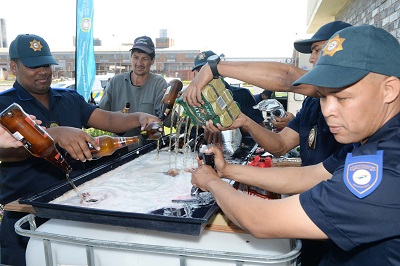
Destruction of impounded alcohol
© City of Cape Town
The City’s six substance abuse treatment sites, following the Matrix® treatment model, have screened 832 new clients in the first half of this year. Substance dependency is viewed as a chronic illness and relapse is a characteristic of any chronic illness. The Matrix® programme provides the tools to analyse relapses and turn them into a learning experience to ensure that relapse is not repeated.
‘Our alcohol and drug strategy reflects the intent of the Organisational Development and Transformation Plan which encourages a transversal approach to tackling challenges facing Cape Town. It also links closely with the National Drug Master Plan. This plan is up for review this year and the City will make representations based on our experience of the last four years. As a country we need to re-evaluate our relationship with substances, both legal and illegal. We also need to realise that it’s not only a government problem, but everyone’s problem,’ added Councillor Mamkeli.
End
Published by: