
City receives excellence award for trenchless technology
7 June 2017
The existing twin Cape Flats Bulk Sewers, constructed in the 1960s, serve a large area of the Cape Flats, as well as providing a link for transfer of flow between two bulk wastewater catchment areas. However, these pipes are severely dilapidated and silted up, and cannot adequately perform their function. To rectify this situation, the City is busy with the Cape Flats 3 Bulk Sewer – Phase 2 (CF3-2) project. The new sewer starts at the Bridgetown Pump Station and discharges into the existing CF3 gravity sewer (Phase 1).
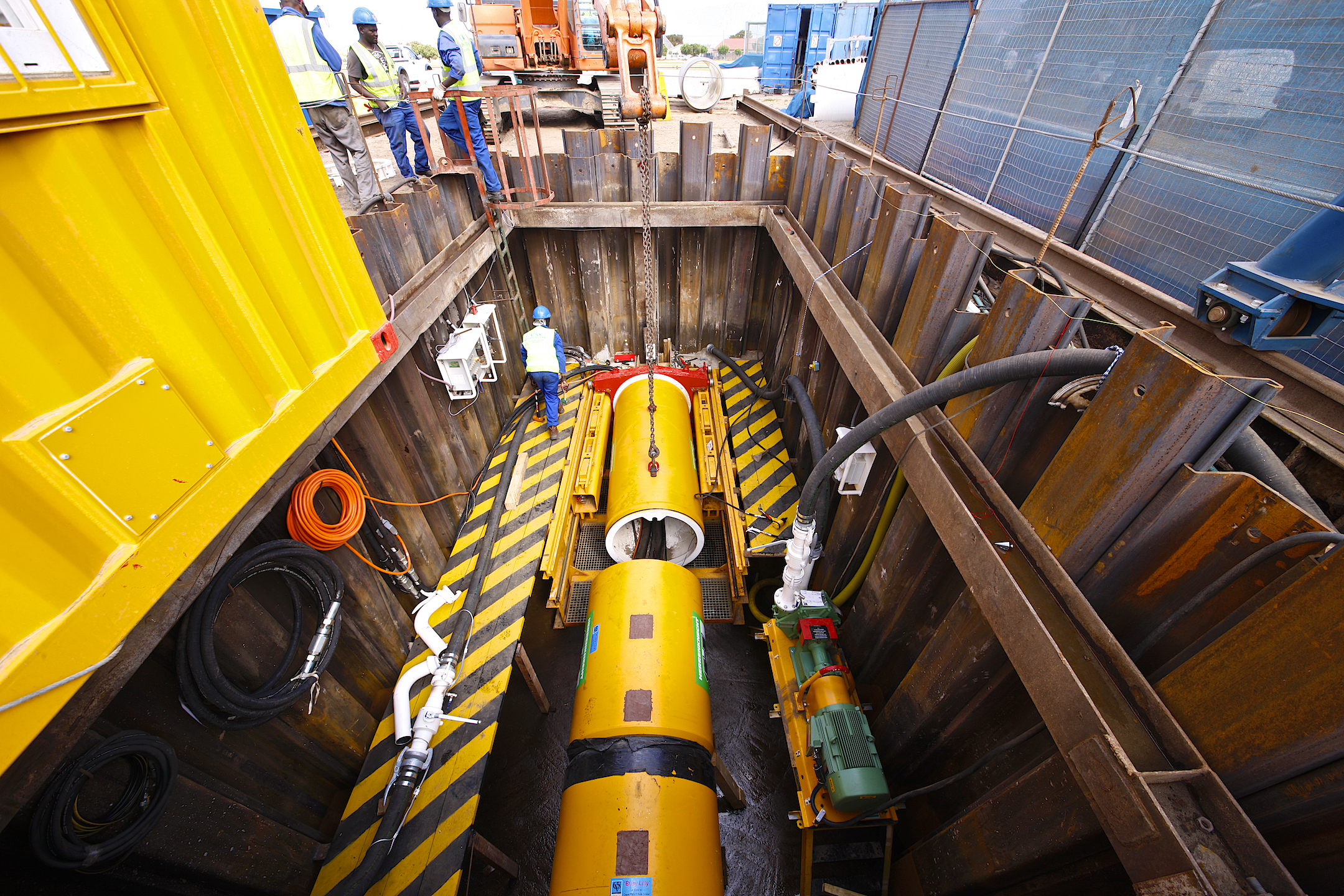
The above image shows the tunnel boring machine (TBM) which was employed on the Cape Flats 3 phase 2 project to tunnel and jack the new 1 000 mm diameter pipe into position. This machine made it possible to install a total of 1 200 m of pipes to great accuracy and little disruption.
Once complete, the new sewer pipes will provide additional capacity in the system for at least the next 50 years, and also allow rehabilitation work to be undertaken on the old sewers. The design of the CF3-2 was undertaken by consultants AECOM between 2012 and 2015, and physical construction work by contractors CSV Construction commenced at the beginning of 2016.
According to Clyde Koen (Project Manager, Water and Sanitation: Reticulation Design, Planning and Projects), the five kilometre route for the new pipes traverses a densely populated area of Cape Town. ‘Significant sections of the pipeline would need to be installed beneath busy roadways’ said Clyde. ‘Therefore, the option of micro-tunnelling was investigated with the goal of reducing disruptions and inconvenience to motorists during construction’.
Following extensive technical and financial evaluations, it was found that micro-tunnelling some sections of the CF3-2 would not only mitigate social and environmental impacts, but would also offer the City a financially feasible alternative at reduced risk and higher end-product quality.
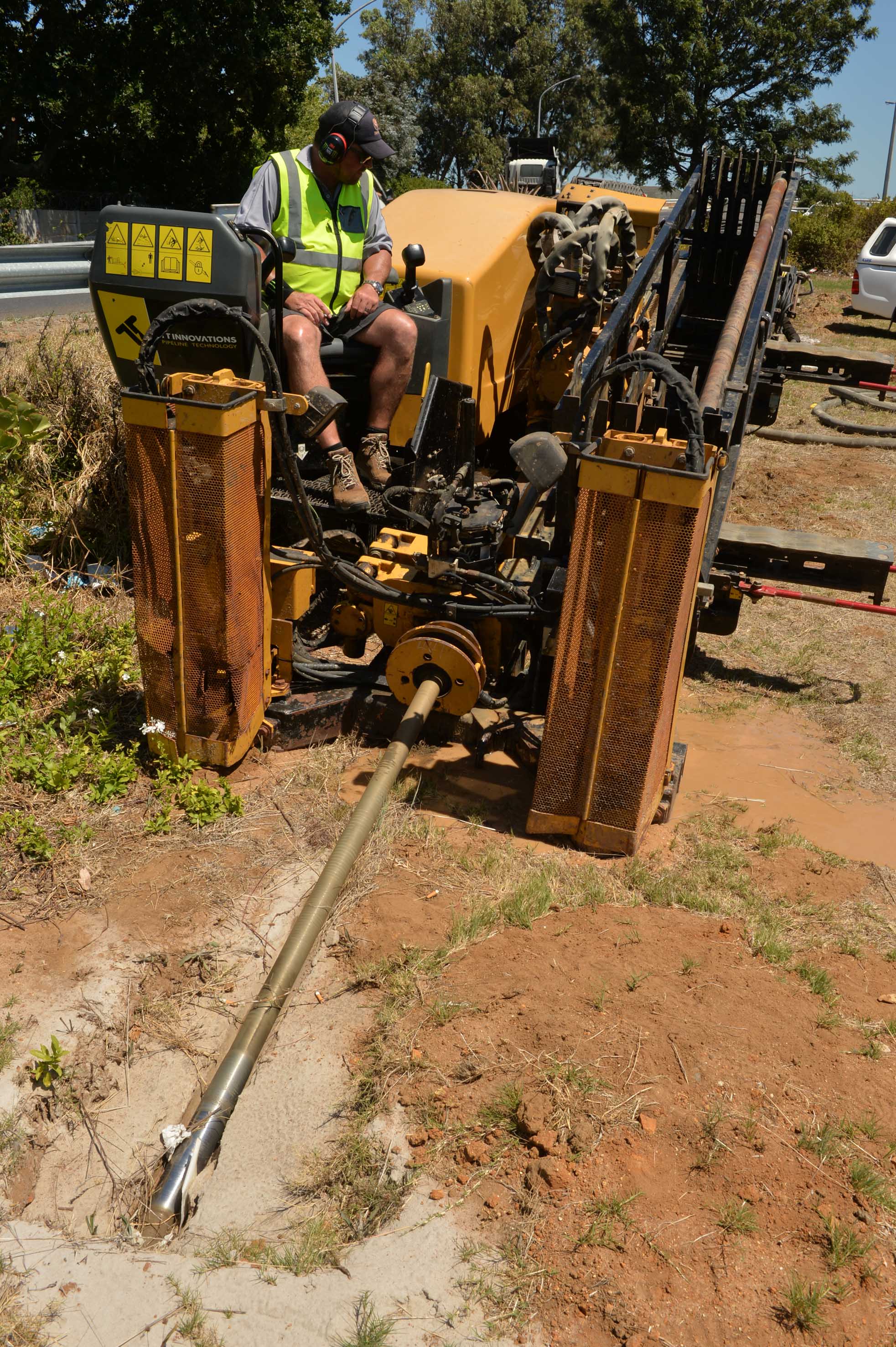
The horizontal directional drilling (HDD) machine pictured above was used on the construction of the new Northern Area Sewer. It was used to drill a hole under roads to allow for a new pipe to be installed.
© City of Cape Town
Using the micro-tunnelling method, a total of 1 200 m of pipeline was successfully installed with a high degree of precision, ahead of programme and within budget. The longest section of micro-tunnel is approximately 200 m long.
In recognition of the work done on this project using trenchless technology, the team was awarded the Award of Excellence 2016 by the Southern African Society of Trenchless Technology. Clyde is confident that micro-tunnelling technology will perform a crucial role in the successful implementation of future pipeline projects located in congested urban areas.
Published by: